Written by Evamore Alez and Madame Bloor. Edited by Linying Loach
Cover Image Drawn By Guy Shield
Date: May 11th, 2019
As just about every toon has heard by now, Disney has purchased Fox. The most significant repercussions of this merger will befall those from Bluesky studios, though they aren’t the only toons that might face this issue. We here at TATV would like to give you a bit of a refresher on both the origins of the company of origin system in general and Disney’s company of origin system specifically.
What IS A COMPANY OF ORIGIN?
A company of origin is the most common toon equivalent of citizenship. It is toon societies’ way of conceptualizing who owns us as intellectual property and by extension, who governs your rights and career options.
(Some countries handle toon personhood differently, but, because of our audience, we’re focusing on the good ol’ fashioned ‘Merican way of categorizing toons.)
Where did it Come from?
The system of company of origin was created to track which companies owned the first generation of born toons. In the 40s and 50s, various IP disputes were caused by one company trying to hire the children of the toons from another company. A company would argue that, because they drew that toon’s parents, they were owed a cut of whatever money they planned on paying the child with.
In one final push to resolve the issue in the favor of toons, the question of whether toons qualify for birthright citizenship was brought to the judicial system. Despite several appeals, all the way up to the Supreme Court, the original decision held, and toons were disqualified from birthright citizenship on account of not being human.
To save all companies involved from paying further legal fees, an agreement was made between the largest three media companies and the US Congress to amend Title 17 of the US Code. The new US code stated that the copyright ownership over a born toon would extend from their parents. This version of the US Code would influence a similar line in the Universal Copyright Convention, ensuring this policy would last worldwide for decades to come.
How do you know YOur COmpany of Origin?
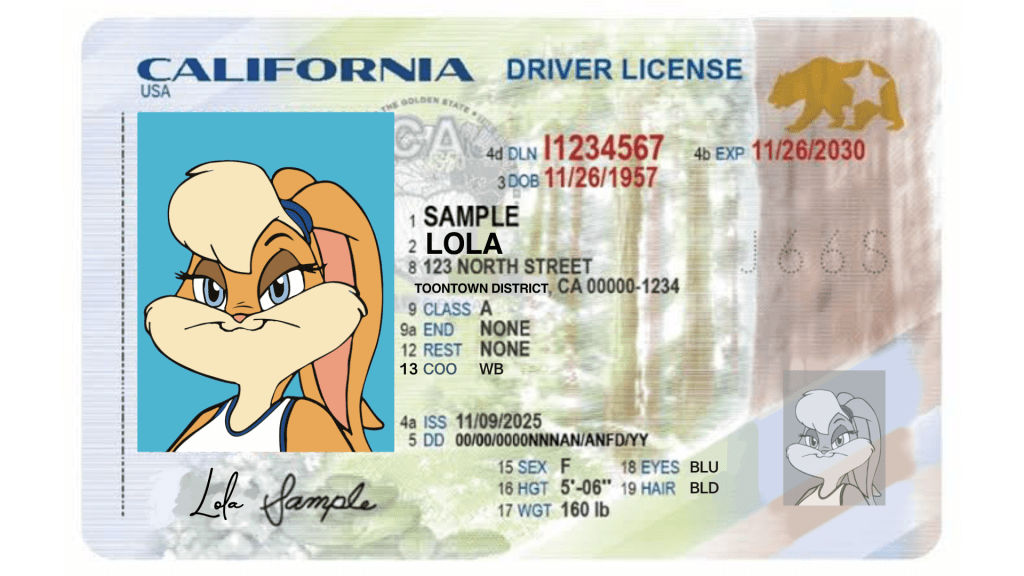
A sample driver’s license featuring Lola Bunny.
Your company of origin is that abbreviation next to item sixteen on your ID. Most companies also provide a separate company card for you to file away with your other important documents. Common company abbreviations on important documents like birth certificates, drivers licenses, and school IDs include:
| Company | Abbreviation |
| Disney | DIS, WD, WDP, WDS, WDC |
| Fox | FOX |
| Universal | UNI, DIU, DRE, ILL, UVV |
| Paramount | PMT, PSK |
| Warner Brothers | WB, WBS |
| Sony | SONY |
| Lego | LEGO |
Some companies have sub-COOs to make it clear which sub-company owns you, but this sub-COO does not tend to have different rights and responsibilities than if owned by the main company.
How does Disney orgaNIZE THEIR TOONS?
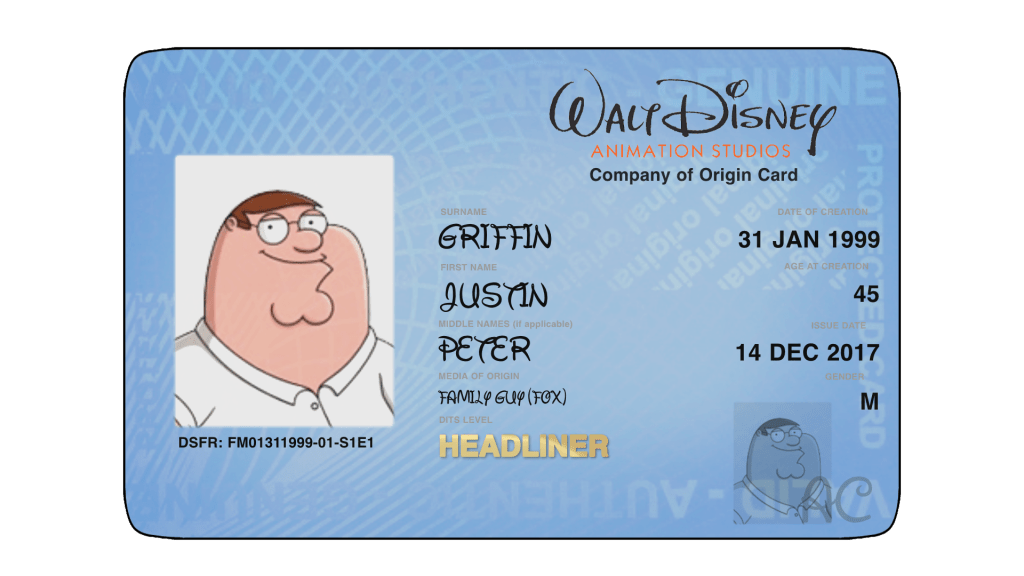
A promotional image of Peter Griffin’s Disney ID card released by Disney in anticipation of the FOX merger.
All toons owned by subsidiaries of Disney are managed by Disney’s Agency For Toons, AKA DAFT. Your local DAFT office- most are located in Royvale of course, but there are a few others scattered throughout Toontown- is where you can go to get your company ID card, dispute health insurance claims, and more, though you may find yourself waiting in line if you don’t schedule an appointment.
Because Disney is one of the most strict companies of origin, you must apply for many of the ‘privileges’ those from other companies enjoy freely, like freedom of travel or employment. Every Disney toon is called to uphold a ‘particular image of the company’ at all times, so interviews are commonly required to be approved for such frivolous activities.
Of course, not all Disney toons are subject to such stringent rules. Disney utilizes an internal ranking system, which determines the benefits their toons may enjoy without reproach based on popularity. Disney argues that this is the only way to ensure all of the many toons it owns are able to enjoy the ‘dignified quality of life that only Disney can provide.’ Others still argue that ‘all companies have these biases,’ and only Disney is transparent enough to make their process public.
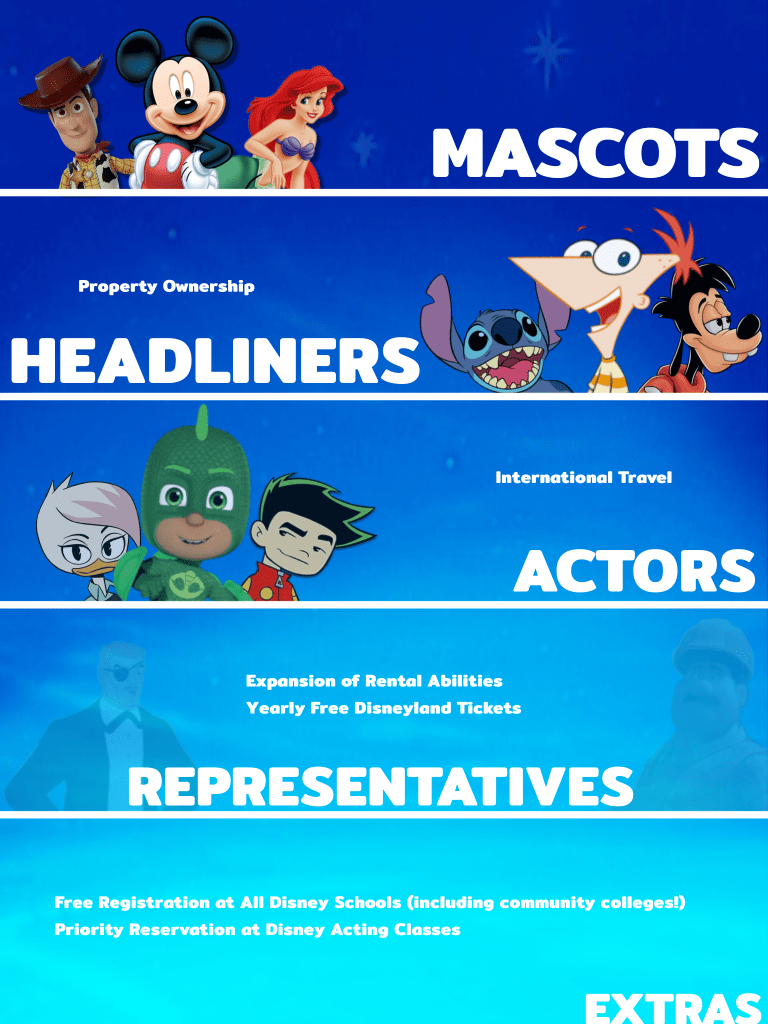
Disney’s publicly released tier system infographic.
As evidenced by these arguments, many toons, Disney and non-Disney alike, cling to this archaic system, parading it as a something to be prideful of. These views further entrench the idea in our society that ones personal value is tied to your popularity. TATV implores you to remember that no company can determine your worth. That you are just as important on a stage, in front of a camera, and waiting at a bus stop.
Why are companies of origin “Necessary”?
A company of origin just the colloquial term for who owns you as an intellectual property. Without a company of origin, toons would fall into a weird legal grey area of not being considered a ‘person’ but not technically being a piece of property either.
Of course, there is no reason to fear this grey area, it only exists because some humans are uncomfortable with the idea of toons being their equal. Let them be uncomfortable.
Toons Against TV strongly believes that the company that created your grandfather should not determine the rights and responsibilities you are given today. Hell, we don’t think the company that may have created you should be able to determine that. The only way to ensure those freedoms is through a path to citizenship and personhood, and the very media company that owns you stands in the way.
Join us in the fight for citizenship. Join us in the fight against TV.
 Toons Against TV
Leave a comment